
What is Project ECHO?
Project ECHO (Extension for Community Healthcare Outcomes) is a movement to demonopolize expert knowledge and amplify local capacity to provide best practice care for underserved people all over the world. The ECHO model™ is committed to addressing the needs of populations disproportionally impacted by certain health conditions by equipping communities with the right knowledge, at the right place, at the right time.
Launched in 2003, Project ECHO grew out of one doctor’s vision. Sanjeev Arora, M.D., a social innovator and liver disease specialist at the University of New Mexico Health Sciences Center in Albuquerque, was frustrated that he could serve only a fraction of the hepatitis C patients in the state. He wanted to serve as many patients with hepatitis C as possible, so he created a no cost, virtual mentoring platform and mentored community providers across New Mexico in how to treat the condition. The ECHO model is a telementoring, guided practice model where the participating clinician retains responsibility for managing the patient. A study published in the New England Journal of Medicine found that hepatitis C care provided by Project ECHO trained community providers resulted in outcomes equal to those provided by specialists at a university.

Mid South Liver Alliance ECHO Project

serving Kentucky, Tennessee, Arkansas, Mississippi, Alabama and Louisiana.
Mid South Liver Alliance in partnership with United Liver, is launching a new program to raise awareness on chronic liver disease in the rural areas in the midsouth states of TN, KY, AL, MS, AR, and LA, using Project ECHO®’s revolutionary guided-practice model that reduces disparities in underserved and rural areas around the world.
“With the shortage of hepatologists in the midsouth region, we are excited to announce this new ECHO program, which enables us to educate, raise awareness, and improve communication between rural communities and the transplant centers where most hepatologists practice in our southern states.
In MS, there are 2 hepatologists statewide. In Alabama, there is currently an 8-month wait to see a hepatologist, and in our other states, it can be 3 to 6 months to get an appointment. We understand that our PCPs, NPs, GIs, and APPs need more information about liver disease, and we want to help them understand the tools available to them. We also know that MASLD/MASH is prevalent in the South due to the number of people with diabetes and obesity. This new program will enable us to open more lines of communication between rural providers and specialty doctors to better serve our communities suffering from liver disease.
Transplant Centers Serving the Midsouth Region
We are working with the 10 transplant centers across our 6 states to arrange for hepatologists to deliver a didactic talk on chronic liver disease each month and to introduce them to our rural areas.
|
City, State |
Name of Liver Transplant Center |
|
Louisville, KY |
University of Louisville Trager Transplant Center |
|
Lexington, KY |
University of Kentucky Transplant Center |
|
Memphis, TN |
Methodist Transplant Center |
|
Nashville, TN |
Vanderbilt Transplant Center |
|
Birmingham, AL |
UAB Transplant Surgery |
|
Little Rock, AR |
UAMS Health – Liver Transplant |
|
Jackson, MS |
University of Mississippi Medical Center Transplant |
|
Jefferson, LA |
Ochsner Medical Center Transplant Center |
|
Metairie, LA |
Tulane Transplant Institute |
|
Shreveport, LA |
Willis Knighton – John C McDonald Transplant Center |

This is YOUR Program!
This is your IECHO, and we hope you will use it to increase your knowledge of chronic liver disease for your rural patients.
We look forward to working with you and your team on any cases you submit and to answering any questions you may have about treatment plans, progress, outcomes, or lessons learned.
Each program allows you to submit cases that you have questions on along with opportunities to make suggestions on topics needed.
Upcoming Event-
Portal Hypertension in Cirrhosis
For our October meeting, we are excited to welcome Dr. Brian Ting from Tulane University School of Medicine to share their expertise with us.
The main objectives of his talk include:
- List the clinical manifestations/complications of portal hypertension
- Risk Stratification
- Ascites
- Variceal bleeding
- Hepatic encephalopathy
- Describe the management of the complications of portal hypertension
- Diuretics and paracenteses
- Trans jugular intrahepatic portosystemic shunt (TIPS)
- Interventional radiology-directed embolization or occlusion
- Liver Transplant


Use this QR code to register for our Next Event
October 12th 12:00 PM – 1:00 PM CST
Subject Matter Expert
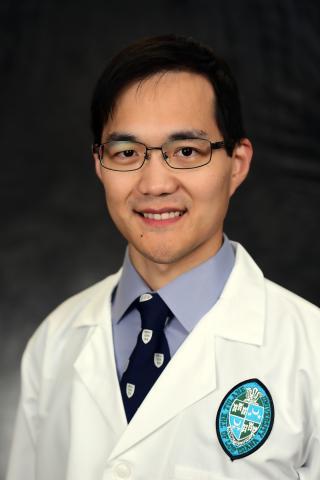
Brian Ting, MD
Director of Gastroenterology and Hepatology Research
Tulane University School of Medicine
Biography
Dr. Ting graduated from National Taiwan University and trained at Johns Hopkins School of Medicine for internal medicine residency, gastroenterology, and transplant hepatology fellowship before joining Tulane University School of Medicine as a transplant hepatology faculty. He conducts translational research on alcohol-associated liver disease, metabolic dysfunction-associated liver disease, nutrition, artificial intelligence, and transplant organ utilization, in addition to serving as site PI for industry-sponsored clinical trials and a co-investigator on federally sponsored studies.
Education and Affiliations
Medical School – National Taiwan University (NTU) College of Medicine, Taipei, Taiwan – 2014
Residency – Internal Medicine, Johns Hopkins Hospital, Baltimore, MD – 2019
Fellowship – Gastroenterology, Johns Hopkins Hospital, Baltimore, MD – 2021
Advanced Fellowship – Transplant Hepatology – Chief Fellow, Johns Hopkins Hospital, Baltimore, MD – 2022
Volunteer
Donate
Contact Us
The Mid-South Liver Alliance ECHO, in partnership with United Liver, Inc., focuses on Chronic Liver Disease and addresses access-to-care issues prevalent in the Mid-South U.S. region. Access to high-quality, informed care is critical, and we must help bridge the gap between rural areas and specialty clinicians.
United Liver is a patient-led, volunteer-run organization advancing community resources, equitable access to quality liver care, and patient-driven research by actively identifying and creating opportunities grounded in lived experience.
